

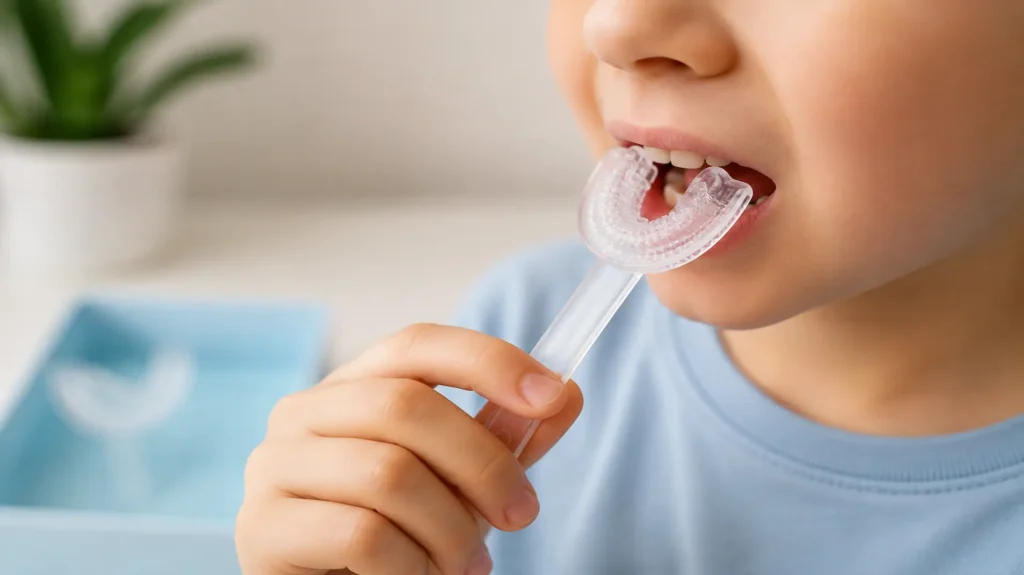
Chewing is most often seen simply as part of eating. However, it is a complex developmental function that involves the coordinated activity of the jaw, tongue, lips, cheeks, teeth, and facial muscles. When a child chews, they are not simply breaking food into smaller pieces. They are gradually learning how to control jaw movements, move food around the mouth with the tongue, use both sides of the mouth, and coordinate chewing with breathing and swallowing.
For some children, this development may be delayed or more difficult. A child may refuse firmer foods, keep food in their mouth for a long time, chew only on one side, or have difficulty closing their lips and managing saliva. When signs like these are present, one of the tools that may be introduced into an individualised therapy programme following a professional assessment is Myo Munchee.
How Does Chewing Develop in Children?
Children are not born with a fully developed chewing pattern. This ability develops gradually alongside jaw growth, tooth eruption, muscle development, and exposure to foods with different textures. At first, jaw movements are simpler and less precise. As a child grows and gains experience, these movements become more stable and better coordinated with the tongue, lips, and cheeks.
Firmer foods, when appropriate for the child’s age and abilities, require more control than puréed or very soft foods. This provides the child with a variety of sensory and motor experiences and gradually helps them learn how much pressure to use when biting, how to move food around the mouth, and when it is ready to be swallowed. For this reason, food textures should progress in line with the child’s individual abilities. If a child has difficulty chewing or swallowing, new textures should not be introduced forcefully, but rather with appropriate professional support.
Why Is Chewing Important for Jaw Development?
When a child bites and chews, the muscles that move and stabilise the lower jaw are activated, along with the muscles of the lips, tongue, and cheeks. The movements and forces generated during chewing form part of the natural stimulation that facial structures are exposed to as they grow. The goal is not for a child to chew as forcefully as possible, but for chewing movements to be controlled, efficient, and distributed as evenly as possible between the left and right sides of the mouth.
However, chewing is not the only factor that influences jaw development and tooth position. Genetics, breathing patterns, tongue posture, swallowing patterns, muscle tone, oral habits, and the structure of the oral cavity also play important roles. For this reason, no single device can ensure proper jaw development or correct tooth alignment on its own. Instead, it may support the development of specific functions that are important for the orofacial system as a whole.
What Is Myo Munchee?
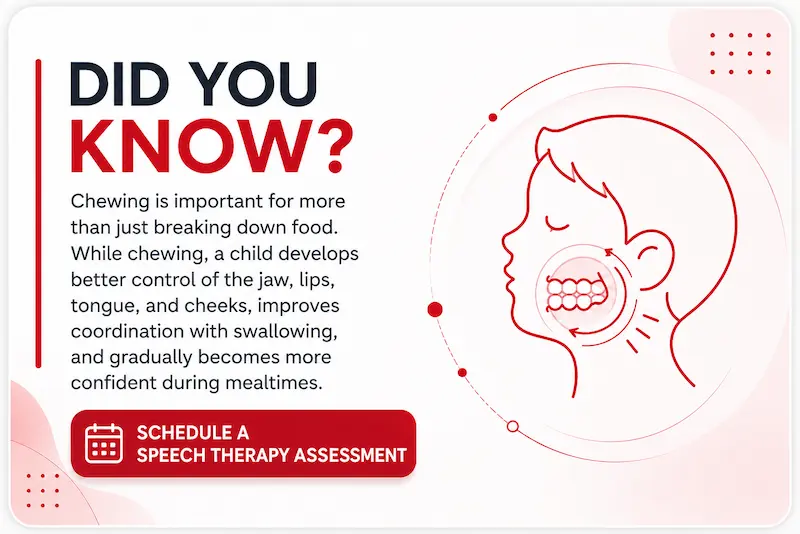
Myo Munchee is a flexible device made from medical-grade silicone, designed to support the practice of chewing and specific oral functions. The device is placed in the mouth, and the child then performs controlled biting and chewing movements. The resistance provided by the device can encourage activation of the jaw, lip, and cheek muscles, while the child simultaneously practises lip closure and the coordinated movements required for chewing. When used as part of a carefully planned programme, a child may practise chewing rhythm, more balanced use of both sides of the jaw, lip closure, saliva control, and greater awareness of the position of structures within the mouth.
Myo Munchee is available in several models and sizes. The choice of device is based not only on the child’s age, but also on jaw width, developmental level, oral muscle tone, and the child’s ability to use the device safely.
When Can the Use of Myo Munchee Be Considered?
Myo Munchee may be considered when a child has weak or inefficient chewing, predominantly uses one side of the jaw, avoids certain food textures, or has difficulty keeping the lips closed. Additional support may also be appropriate for children who keep food in their mouth for prolonged periods, have reduced saliva control, lower oral muscle tone, or certain atypical oral habits. However, the same sign does not necessarily have the same underlying cause in every child. For example, an open-mouth posture may be related to reduced lip control or muscle tone, but it may also be associated with difficulty breathing through the nose.
For this reason, before introducing the device, it is important to assess the child’s overall function rather than focusing on a single symptom. Lip closure and tongue posture are closely linked to maintaining an appropriate nasal breathing pattern. In carefully selected children, working on oral functions may contribute to improved lip control and better positioning of the structures within the oral cavity.
However, if a child frequently breathes through the mouth, snores, or sleeps with their mouth open, it is important to first determine the underlying cause.
Is There a Connection Between Chewing and Speech?
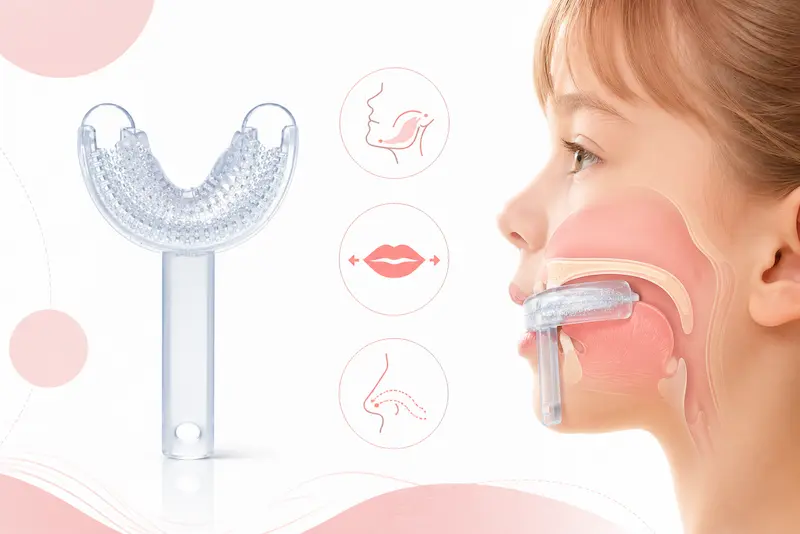
Chewing and speech involve some of the same structures, such as the jaw, tongue, and lips. However, they are different motor functions that require different types of movement and control. In some children, difficulties with chewing may occur alongside difficulties with speech development. However, this does not mean that practising chewing alone will lead to speech development or clearer pronunciation. When a child has difficulties with communication or speech development, a speech and language assessment is needed, followed by direct work on the specific skills the child requires.
Myo Munchee may be included as part of a broader programme when, in addition to speech difficulties, the child also has specific challenges with chewing, lip closure, saliva control, or other oral functions. The device is not a substitute for speech and language therapy, but may be used as additional support when there is a clearly defined therapeutic goal.
Support Is Chosen According to the Child’s Needs
Every child has different abilities, needs, and challenges. For this reason, the decision to use Myo Munchee is not based solely on age or on a single observed symptom. During a BDA speech and language assessment, we evaluate jaw, tongue, and lip control, chewing and swallowing patterns, breathing, saliva control, acceptance of different food textures, and the child’s positioning during feeding.
Based on this assessment, we identify what is currently making feeding most difficult for the child and determine what type of support may be appropriate. For one child, the focus may be on developing more efficient chewing, while for another, the priority may be safer swallowing, improved lip control, adapting food textures, or reducing the effort required during meals.
The goal is not simply to use a device, but to create the conditions for feeding to become safer, easier, and better suited to the child’s individual abilities. If you notice that your child has difficulty chewing, keeps food in their mouth for a long time, refuses certain textures, has difficulty keeping their lips closed, or becomes tired quickly during meals, a professional assessment can help you better understand why these difficulties are occurring and what type of support your child may need.
Is Myo Munchee Suitable for Every Child?
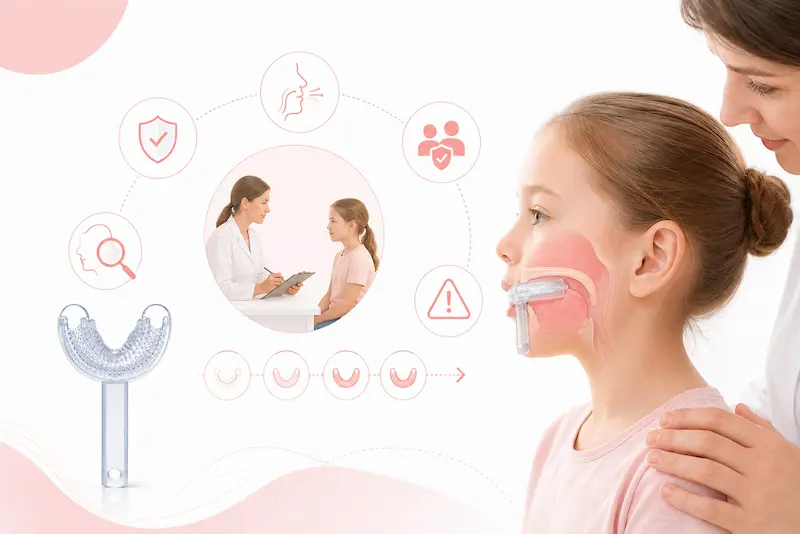
No. The decision to use Myo Munchee depends on the child’s individual needs and abilities, oral muscle tone, the size and structure of the oral cavity, breathing and swallowing patterns, and the child’s ability to accept and use the device safely. Age can be used as a general guideline, but it is not the only factor considered.
Can Myo Munchee Correct the Position of the Jaw or Teeth?
Myo Munchee is not a substitute for dental or orthodontic treatment. It may support the development of certain oral functions, but it cannot correct the position of the jaw or teeth on its own.
Does Myo Munchee Affect Speech Development?
Myo Munchee is not a treatment for delayed speech development. It may be included as part of a broader programme when a child has specific difficulties with chewing, lip closure, saliva control, or other oral functions in addition to speech difficulties. It is not a substitute for direct speech and language therapy focused on communication and speech development.
Can Parents Choose the Size and How to Use Myo Munchee on Their Own?
It is not recommended to choose the size or determine the programme of use based solely on the child’s age or general guidelines. Oral functions, the dimensions of the oral cavity, breathing and swallowing patterns, and the child’s ability to use the device safely should all be assessed.
During use, it is also important to monitor the child’s response and adjust the programme when necessary.


